ICCI, CGI Milan and LCA Studio Legale convene Milan roundtable with India’s Textiles Secretary on opportunities for Italian textile companies
India is now the largest export market for Italian textile machinery. A meeting with India’s Ministry of Textiles in Milan explored how companies from both countries can build on that relationship through trade, investment and industrial partnerships.
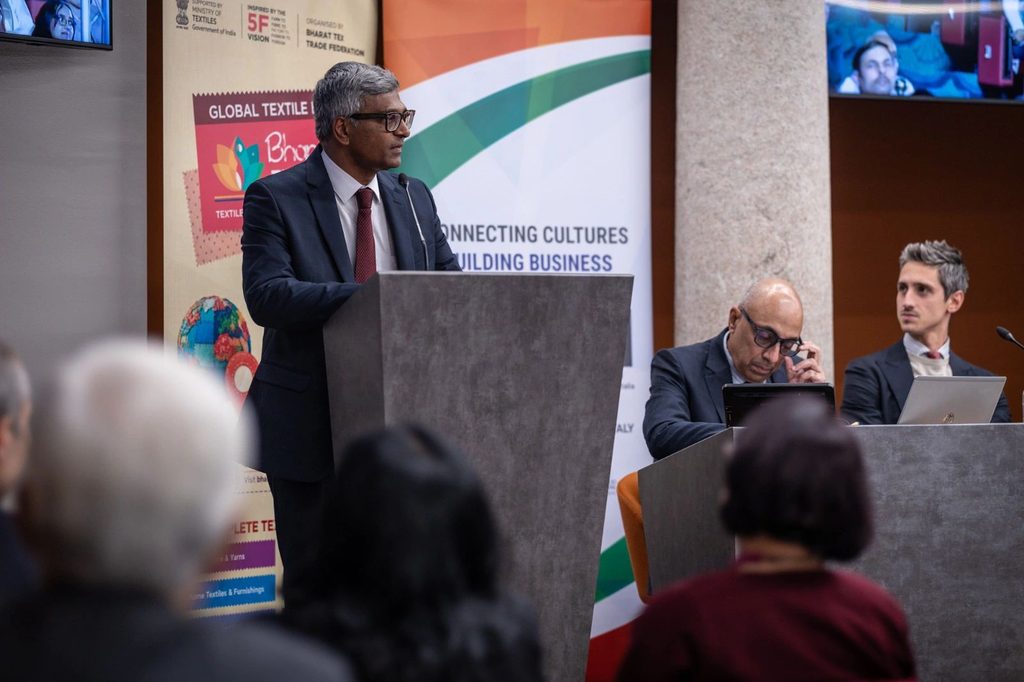
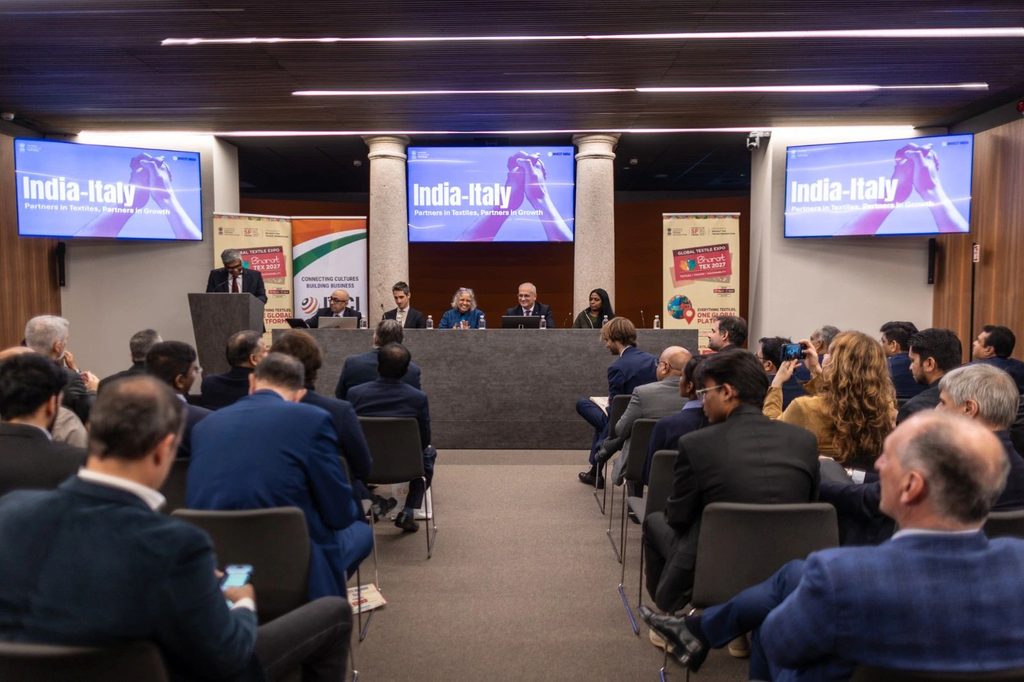
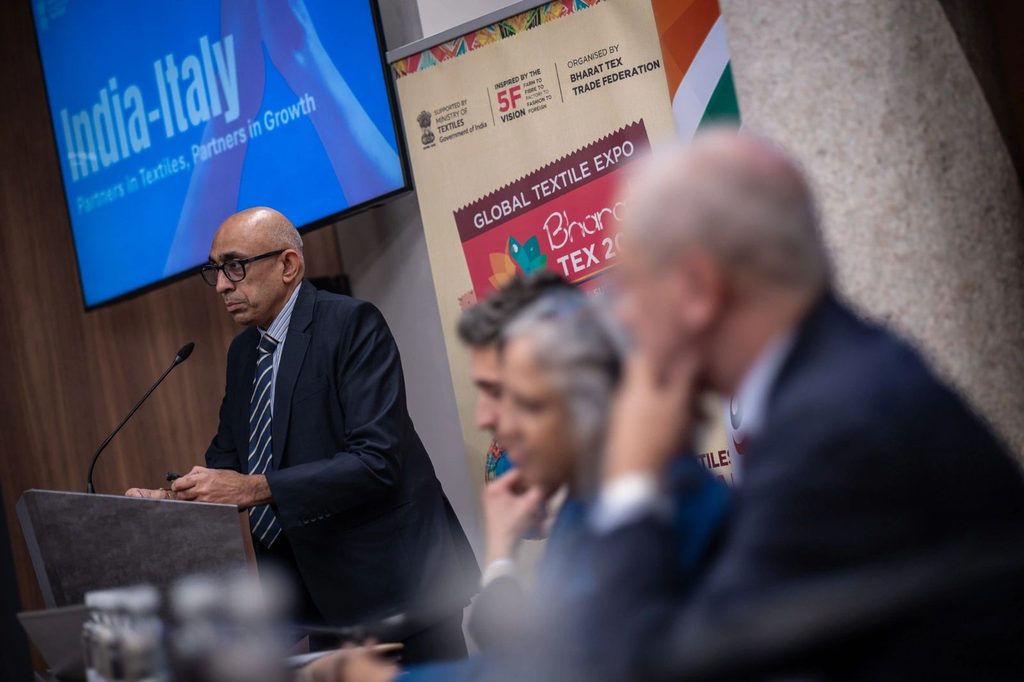
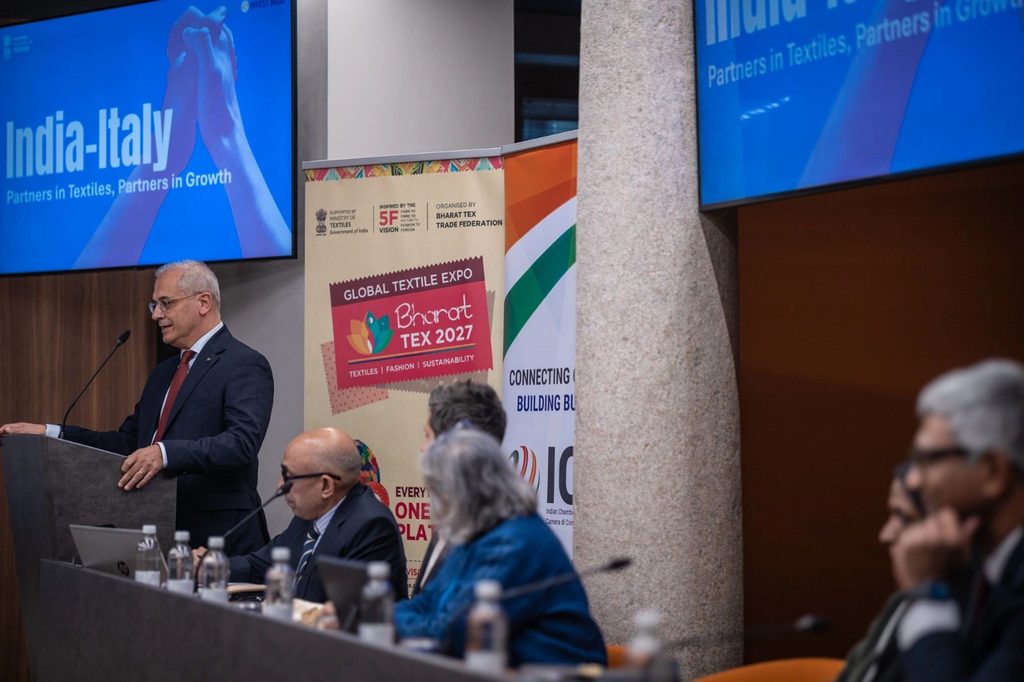
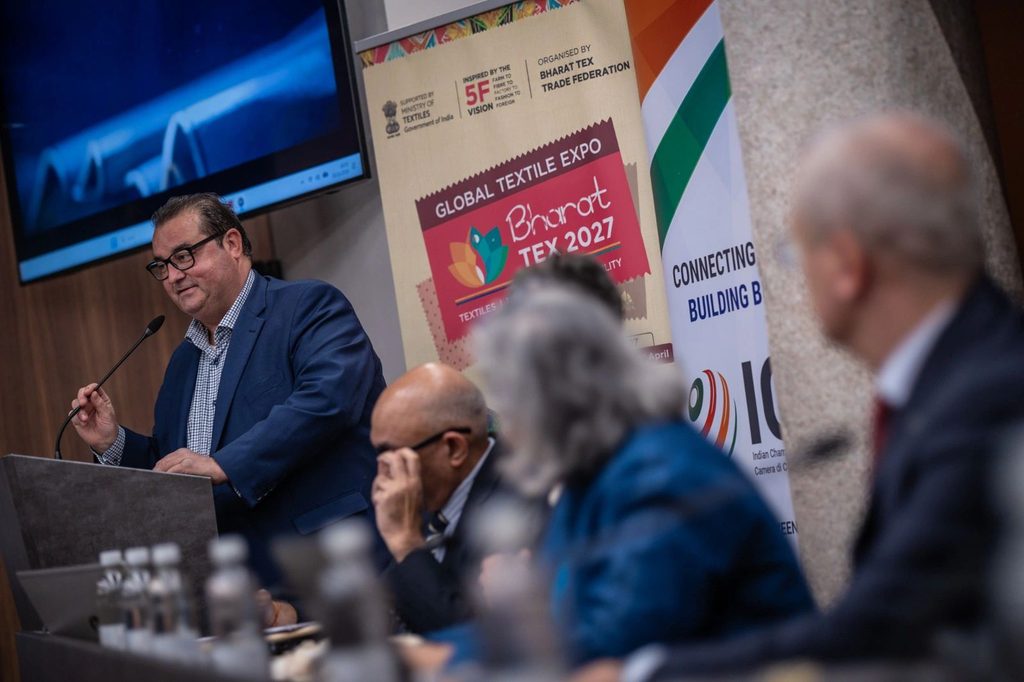
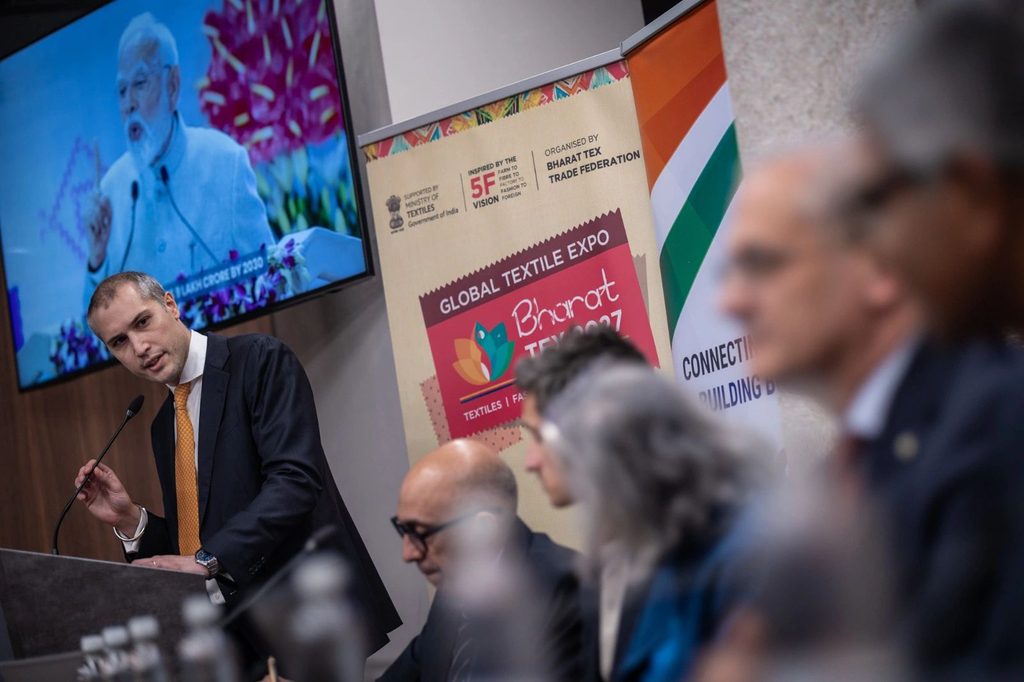
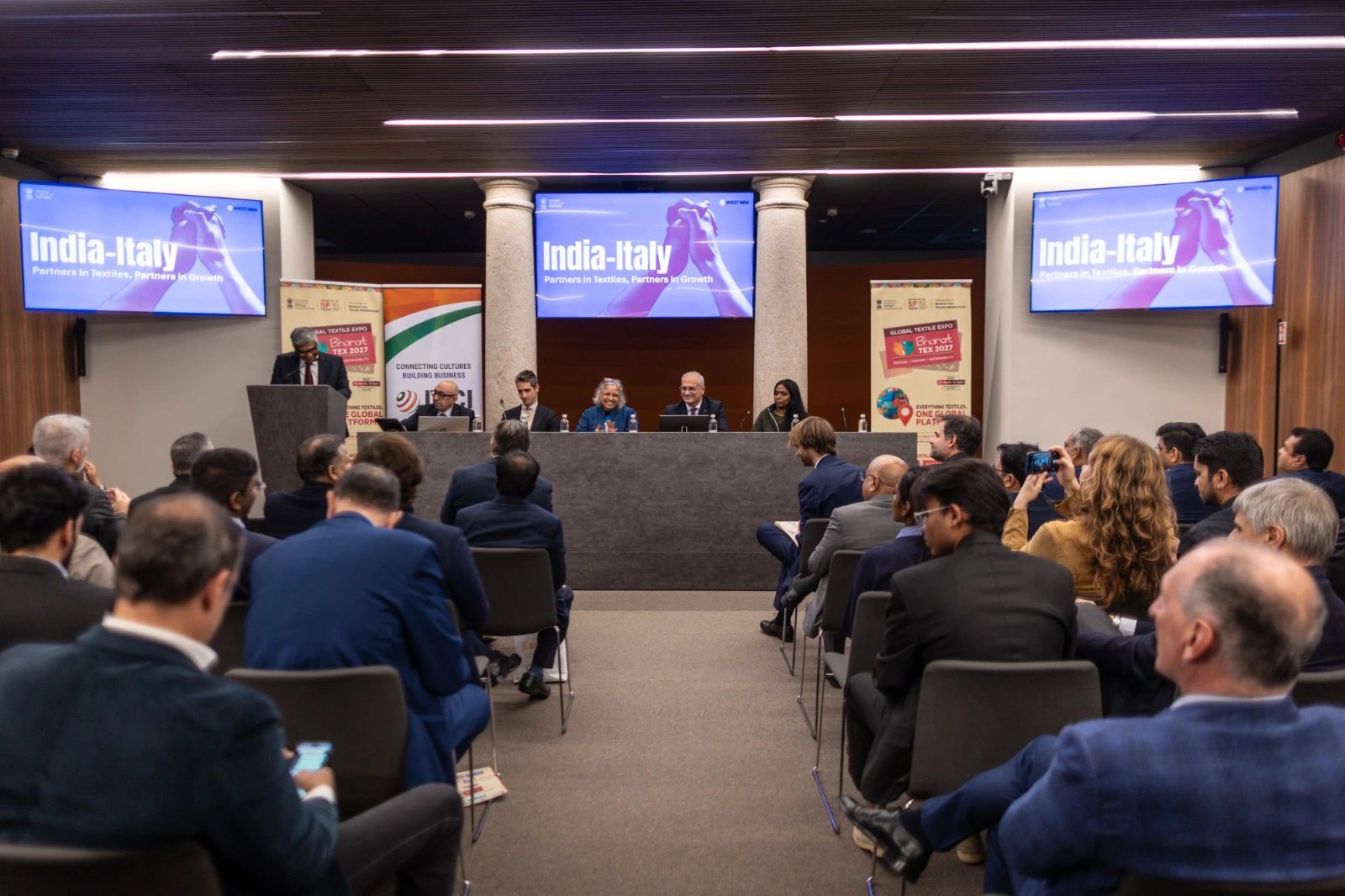
On 2 November 2026, the Indian Chamber of Commerce in Italy (ICCI) welcomed a delegation led by Neelam Shami Rao, Secretary, Ministry of Textiles, Government of India, for a roundtable at LCA Studio Legale in Milan. Organised by ICCI in collaboration with the Consulate General of India in Milan, ICCI member LCA Studio Legale and the Indian Business Forum of Italy (IBF), the meeting brought institutional representatives and business leaders together to explore the next phase of India–Italy cooperation in textiles.
The timing was significant. According to ACIMIT, the Association of Italian Textile Machinery Manufacturers, Italian textile machinery exports to India reached €176 million in 2025, up 28% on the previous year. India became the sector’s largest overseas market in a year when Italian textile machinery exports declined overall. For Italian companies, those figures point to an established customer base and raise a broader commercial question. Where else could Italian technology, fabrics and manufacturing expertise find a place in India’s textile industry?
Bringing institutions and industry together in Milan
Luciano Pettoello Mantovani, Secretary General of ICCI, opened the meeting and welcomed the delegation and participating companies. Marco Bettin, Vice President of ICCI, outlined the Chamber’s role in supporting the initiative and connecting businesses with counterparts in both markets. Lavanya Kumar, Consul General of India in Milan, addressed bilateral business relations and the facilitation of business visas, a practical consideration for companies whose engineers, buyers and production teams need to travel regularly between Italy and India.
Alberto Russo, President of Uniontessile Confapi, represented CONFAPI, ICCI’s partner for the Indian market, bringing the perspective of Italy’s small and medium-sized textile enterprises to the discussion. Bipin Menon, Trade Adviser at India’s Ministry of Textiles, presented business opportunities in India, the PM MITRA integrated textile parks and Bharat Tex. Bhadresh Dodhia, Co-Chair of Bharat Tex, introduced the forthcoming edition of the exhibition and its relevance to companies seeking commercial and industrial partners.
Machinery and finishing technology with measurable returns
For Italian machinery manufacturers, some of the clearest opportunities lie in helping Indian mills improve the economics of an existing production line. A dyehouse assessing new finishing equipment, for example, can compare water and energy consumption per kilogram of fabric, the time required to change colours and the number of batches that need reprocessing. An Italian supplier that can demonstrate those gains on the customer’s own fabric gives the mill a basis for calculating both the investment and its payback period. Energy efficiency, automation and lower resource consumption are already priorities for Italian machinery manufacturers, according to ACIMIT.
There is also room for Italian SMEs that specialise in one stage of production. A manufacturer of inspection equipment could work with a weaving mill to detect defects earlier. A finishing specialist could run a trial with an Indian processor to improve colour consistency across repeat orders. For either business, a local partner able to install equipment, stock critical spare parts and train operators could make a first sale more attractive to the customer and open the way to repeat business.
Fabrics, yarns and collections for Indian and international buyers
Italian fabric and yarn producers face a different opportunity. Their potential customers include Indian brands developing collections for domestic consumers and Indian garment manufacturers sourcing materials for international clients. The distinction matters. A premium menswear label might value access to a distinctive Italian wool or linen blend in limited quantities. A garment exporter assessing the same fabric would also need confidence in repeat-order availability, colour consistency, price and delivery against its overseas buyer’s calendar.
Product development offers another route into the market. An Italian mill and an Indian apparel manufacturer could start with a small collection of lightweight tailoring fabrics, agreeing on weight, handle, target price and delivery dates before committing to larger volumes. In home textiles, an Italian design studio could work with an Indian producer on coordinated upholstery or furnishing fabrics for hospitality customers. In each case, the first collection gives both parties a way to test buyer interest and establish how they work together.
The choice of partner also has a geographical dimension. India’s Ministry of Textiles identified Tiruppur as the country’s leading textile and garment exporting district in 2025–26, with Bengaluru Urban, Panipat, Surat, Ahmedabad and Ludhiana also among the top ten. For an Italian company planning its first visit, identifying the mills, garment makers or exporters that buy its particular product can turn a general market visit into a focused series of factory meetings.
Technical textiles and industrial investment
Technical textiles offer scope for Italian companies whose expertise lies in how a material performs in use. Filtration media, protective fabrics and automotive interiors are examples where fibre selection, coating, lamination and testing can determine whether a product meets a customer’s specification. A specialist Italian producer could begin with a joint development trial in which an Indian manufacturing partner contributes production capacity and access to industrial customers, while the Italian company contributes process expertise or a specialised finish. India’s National Technical Textiles Mission identifies research, innovation and market development as priorities for the sector.
For companies considering a production presence in India, the PM Mega Integrated Textile Regions and Apparel (PM MITRA) Parks programme is particularly relevant. The Government of India has approved seven parks designed to bring different stages of textile manufacturing together with shared infrastructure. For a dyeing or finishing company, the questions to examine at a specific site include when water supply and effluent treatment will be available, which mills are expected to operate nearby and how quickly finished goods can reach customers. A machinery supplier assessing the same site may see a different opportunity: a service base close to several prospective customers.
Bharat Tex 2027 as a next step
A practical opportunity to pursue the Milan discussions will come at Bharat Tex 2027, scheduled for 17–20 February 2027 at Bharat Mandapam in New Delhi. The exhibition covers fibres, yarns, fabrics, apparel, home furnishings, technical textiles and machinery. Its breadth makes it possible for an Italian company to meet several types of counterpart on the same visit, from prospective buyers and distributors to manufacturers interested in joint product development.
For participating companies, the most productive preparation begins with a specific commercial objective. A machinery builder might arrange meetings with three mills facing the same processing challenge. A fabric producer might bring a sample range tailored to Indian buyers and discuss minimum orders and delivery times. A company considering local production could combine meetings in New Delhi with visits to shortlisted partners or industrial sites.
ICCI thanks the Consulate General of India in Milan, LCA Studio Legale, the Indian Business Forum of Italy, CONFAPI, the distinguished speakers and all participating companies for their contributions. Italian and Indian businesses wishing to follow up on the roundtable, identify potential partners or assess opportunities in either market are invited to contact ICCI.
Photograph by Eleonora Pavesi, courtesy of LCA Studio Legale.